Food waste caddies are landing in Wanstead
Redbridge Council is delivering food waste caddies to every remaining house in the borough in November and December. Mine turned up early on the Warren Estate, with no warning. What goes in, when it's collected and where it ends up.
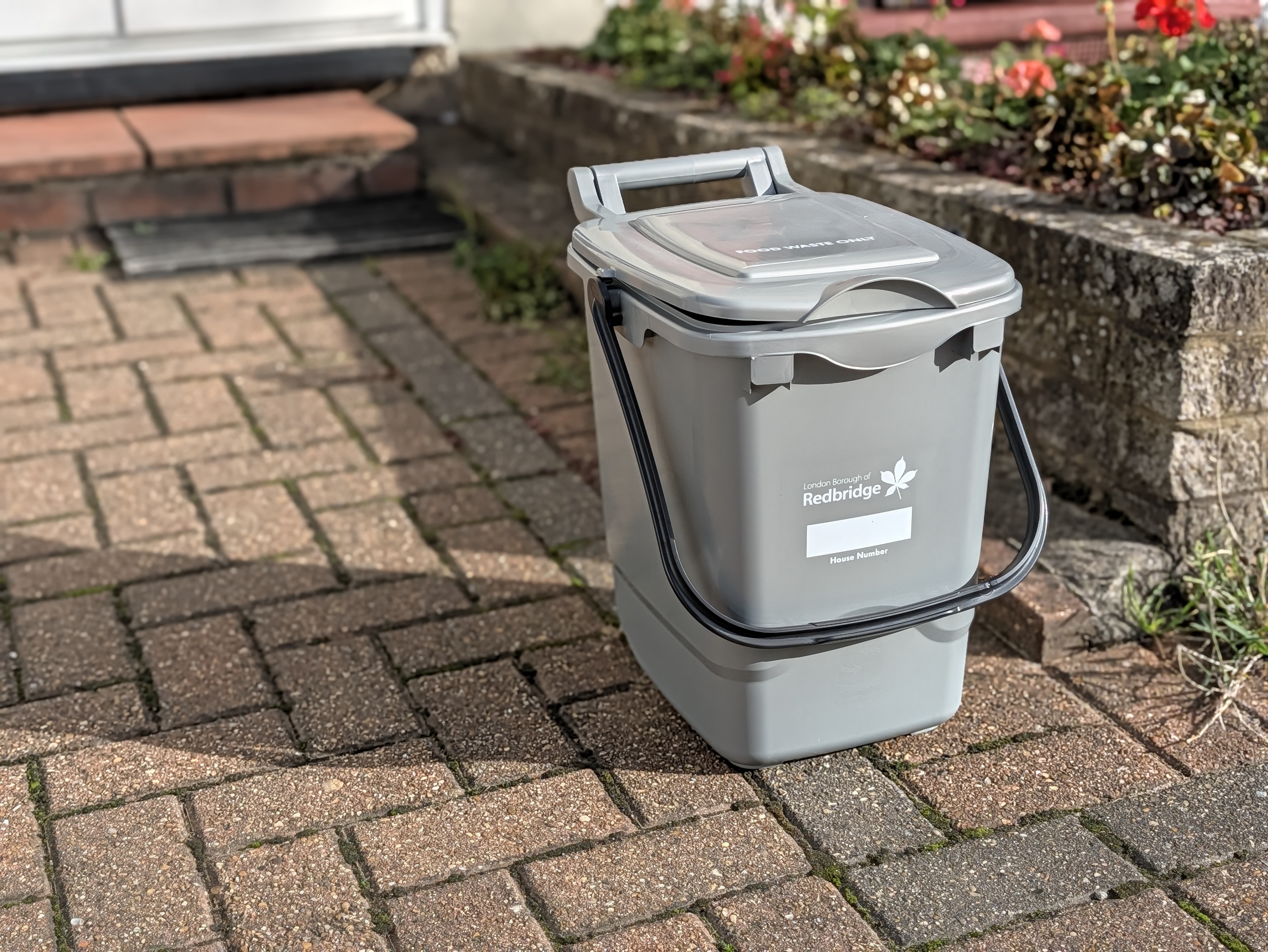
I live on the Warren Estate, and my caddy turned up on Tuesday 27 October. No warning, no letter. My first thought was that someone had dumped it on my driveway by mistake, until I spotted them rolled out all along the street. We've since started using them.
It turns out we were just a bit early. Redbridge Council is rolling out weekly food waste collections to every house in the borough that doesn't have one yet, with deliveries planned for November and December, so your caddy is probably on its way. The council said in September that a letter would explain "when you will get your caddies", but it doesn't say whether ours were early or the letters are still coming. If you've got a caddy and no letter, the council's food waste page says you can check your collection day on the online bin day checker, where start dates appear about two months ahead.
Key things to know
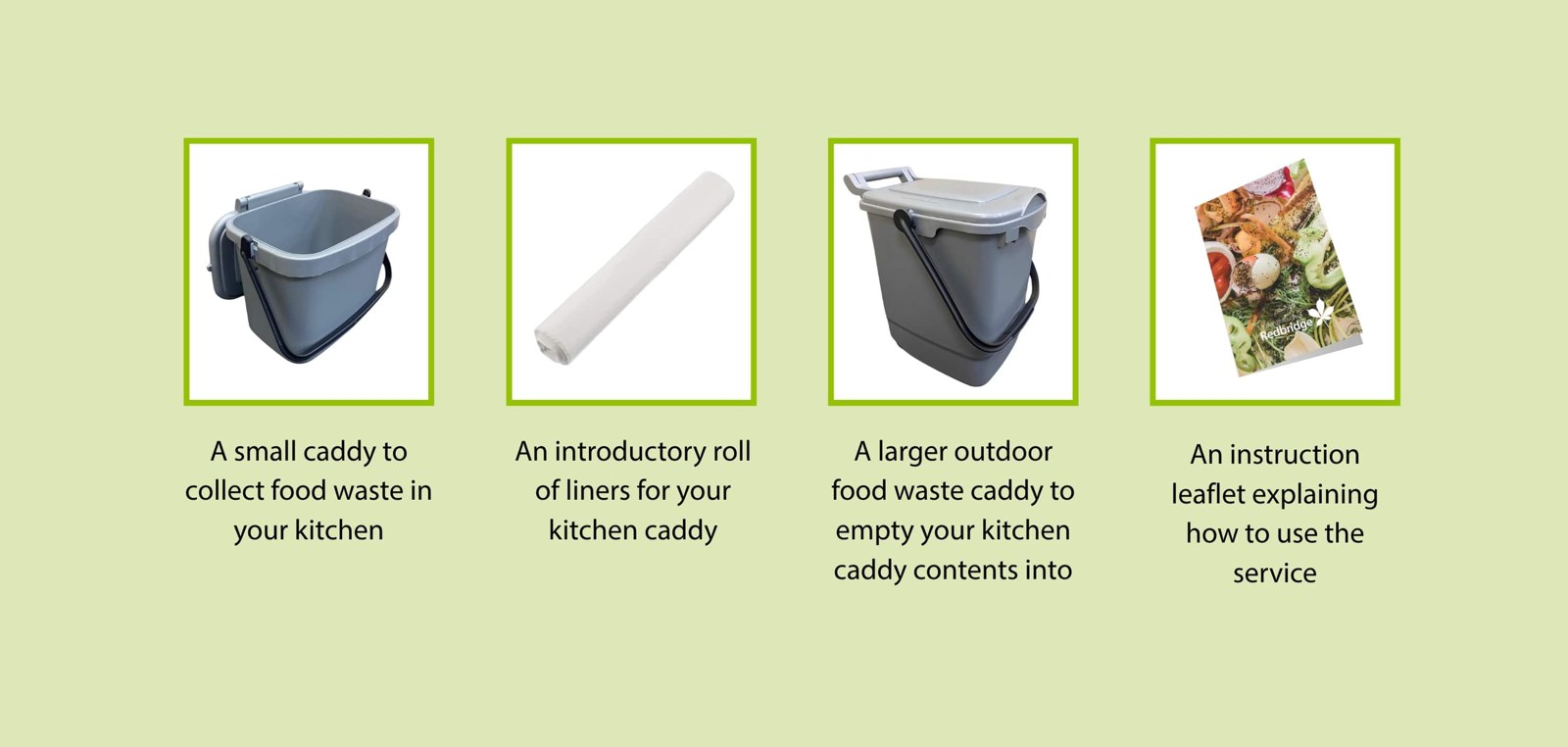
- What you get: a 5-litre kitchen caddy (use your own if you prefer), a 23-litre outdoor caddy (must be the council's), a starter roll of liners and a leaflet. The outdoor caddy's handle doubles as a fox-proof lock, and the lid must sit flush before you lock it.
- What goes in: cooked and uncooked food, including meat and bones, fish, dairy, bread and pastries, fruit and veg, rice and pasta, eggshells, tea bags and coffee grounds. Plate scrapings are fine.
- What stays out: cooking oil and liquid fat, liquids such as milk, garden waste, animal bedding and any packaging.
- Collection day: weekly. Put the outdoor caddy "at the boundary of your property" by 6am on your collection day. Refuse and recycling collections stay as they are, with no current plans to change how often they happen, says the council.
- Liners: optional. One plastic, paper or biodegradable liner at a time, and no carrier bags. After the starter roll, you buy your own.
- No returns: the council says it is "required by law to provide every household with the equipment", and caddies "must stay at your property, even if you choose not to use them right away".
- Flats: later phases, no dates yet. The council will assess each block individually, expects most to use communal bins, and will write directly to owners "closer to when" collections start.
- Damaged, stolen or missing caddy: email cleansing.services@redbridge.gov.uk. You can also ask for one extra caddy per household, while stocks last. Assisted-collection residents get theirs automatically.
The council supplies plastic liners, arguing its plant separates them more reliably than compostable bags, which "often don't remain in use long enough to fully break down". It is "looking into options for discounted liner supplies".
Collected food waste goes to an anaerobic digestion plant in Dagenham, which turns it into biogas for electricity and heat, plus bio-fertiliser for farmland. Crews sometimes tip several caddies into a larger "transfer bin" first; the council stresses this doesn't mean food waste is mixed with general rubbish.
The council says about 13,000 homes in Redbridge already get the collection. A September press release put the figure at 10,000 households after "a phased rollout last year", and quotes Cllr Jo Blackman, cabinet member for environment and neighbourhoods and a Wanstead Village ward councillor. She said nearly 80% were regularly using their caddy, and that more than 400 tonnes had been collected, "generating enough renewable energy to heat around 40 average UK homes for a year". These are the council's own figures, and I haven't been able to verify them independently. The council says around 40% of household waste in Redbridge is food, though its FAQ says "around one third".
And no, you can't opt out. Under the government's Simpler Recycling reforms, councils in England must offer free, at-least-weekly food waste collections from 31 March 2026, unless they have a government-approved transitional arrangement. Redbridge calls it a "statutory service", part-funded by central government, but doesn't say, in the pages I read, whether it relies on a transitional arrangement for its later start.