Wanstead Park has a lake problem
The Ornamental Water, centrepiece of Wanstead Park's historic lakes, has "completely dried up", says the City of London Corporation. The refill plan hangs on an Environment Agency decision that hasn't arrived. Meanwhile the Grotto has a steel frame, but its future is still open.
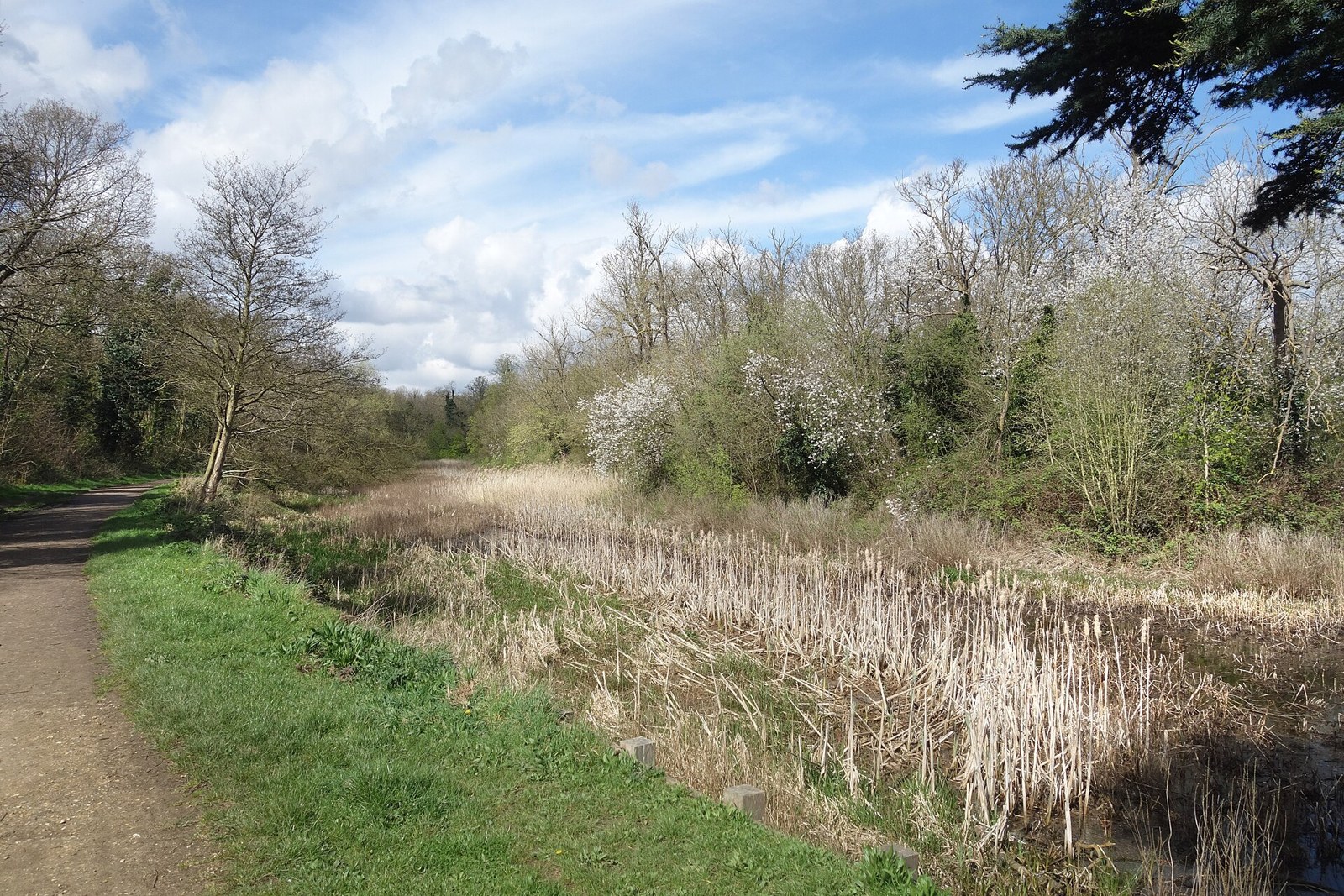
Wanstead Park's Ornamental Water is currently a lake in name only. The City of London Corporation says it has "completely dried up" on its Wanstead Park management page, last updated on 29 June, and describes the park as "London's greatest surviving designed historic waterscape".
For those of us who walk round it, that's a big deal. The City, which manages the park as part of Epping Forest, says a plan to pump water in from the River Roding is "awaiting a decision" from the Environment Agency. Until it arrives, the lake's long-term fate, and that of the Grotto on its bank, stay unsettled.
The City bought the park as part of Epping Forest in 1880. It's now a Grade II* registered park and garden and the main part of the Wanstead Park Conservation Area. The City describes a "300-year-old lake cascade system": The Basin, Shoulder of Mutton Pond, Heronry Pond, Perch Pond, The Dell and the Ornamental Water, with the River Roding as "a valuable 'blue ribbon'" on the east edge.
The system "is not working effectively", the City says, and dry summers are only part of it:
- Development around the park. Run-off from surrounding land once fed the lakes. The City says the Lake House Estate and Aldersbrook Estate, once part of the parkland, plus housing and roads, have cut off the natural flow.
- A leaking Heronry Pond. Relined in the 1900s, it was hit by several high-explosive bombs in the Second World War and, in 1944, a V1 flying bomb "right in the middle, creating a large crater". Repairs in the 1940s and 1950s didn't stop the leaks.
- The end of river pumping. The City could pump from the Roding until 2000. Since 2001 a borehole has fed the Heronry and Perch Ponds from the aquifer, under an Environment Agency licence for 236,520 cubic metres a year until 2028. "It is not sustainable to keep taking water from the aquifer," the City says.
The Wren Wildlife and Conservation Group's autumn newsletter says Shoulder of Mutton Pond shrank to less than half its usual winter size this summer, and Alexandra Lake was "also very dry". The Ornamental Water had already gone.
The refill plan
A March 2023 feasibility study by McCoy Consulting mapped 12 potential projects under the Wanstead Park Waterscape Adaptive Pathway, aiming to keep lake levels up and cut reliance on the aquifer. The City's spring 2026 update says:
- Roding pumping. Pump river water into the Ornamental Water in winter, store it, and release it back to the Roding in summer to help low flows. The City is paying, but needs the Environment Agency's agreement and "is currently awaiting a decision". No decision had been published at the time of writing.
- New pumps. Reinstating the historic pump house is being specified and tendered, but "a confirmed source of water is required before this project can progress".
- Lakebed surveys. Borehole surveys took place in April; the City is "awaiting the report" on whether the lakebed can hold water.
- Halted projects. The Lost Spur project at Heronry Pond stopped after surveys found a bat roost and great crested newts, making it unaffordable. Lowering the lake in front of the Grotto stopped after a failed bid to the Mayor of London's Green and Resilient Spaces Fund and because of "the archaeological significance of the stones in the lakebed". Drainage work on the Long Walk stopped because it is "the most archeologically sensitive part of the park".
- Reed beds. A 160 square metre floating reed bed went into the Heronry Pond in January 2025, with £80,000 from Britvic via the charity Thames21. It "flourished" in 2025, says the City.
The City is also spending £1.15 million strengthening the dams. The Heronry Pond, Perch Pond and Ornamental Water are Large Raised Reservoirs, regulated by the Environment Agency, which classed those in the park as "high risk" in 2018. That isn't a flood prediction: the City says it reflects potential damage to nearby properties should the lakes fail, in a flood "which would only occur if all the lakes are full with water".
With the lake dry, the City's cattle grazed the lakebed for a few weeks in May, then moved to the neighbouring Plain "as they began to try to get onto the islands to graze". The City asks visitors to stay off the lakebed, because "the banksides and island banks form an important part of this heritage feature".
The Grotto
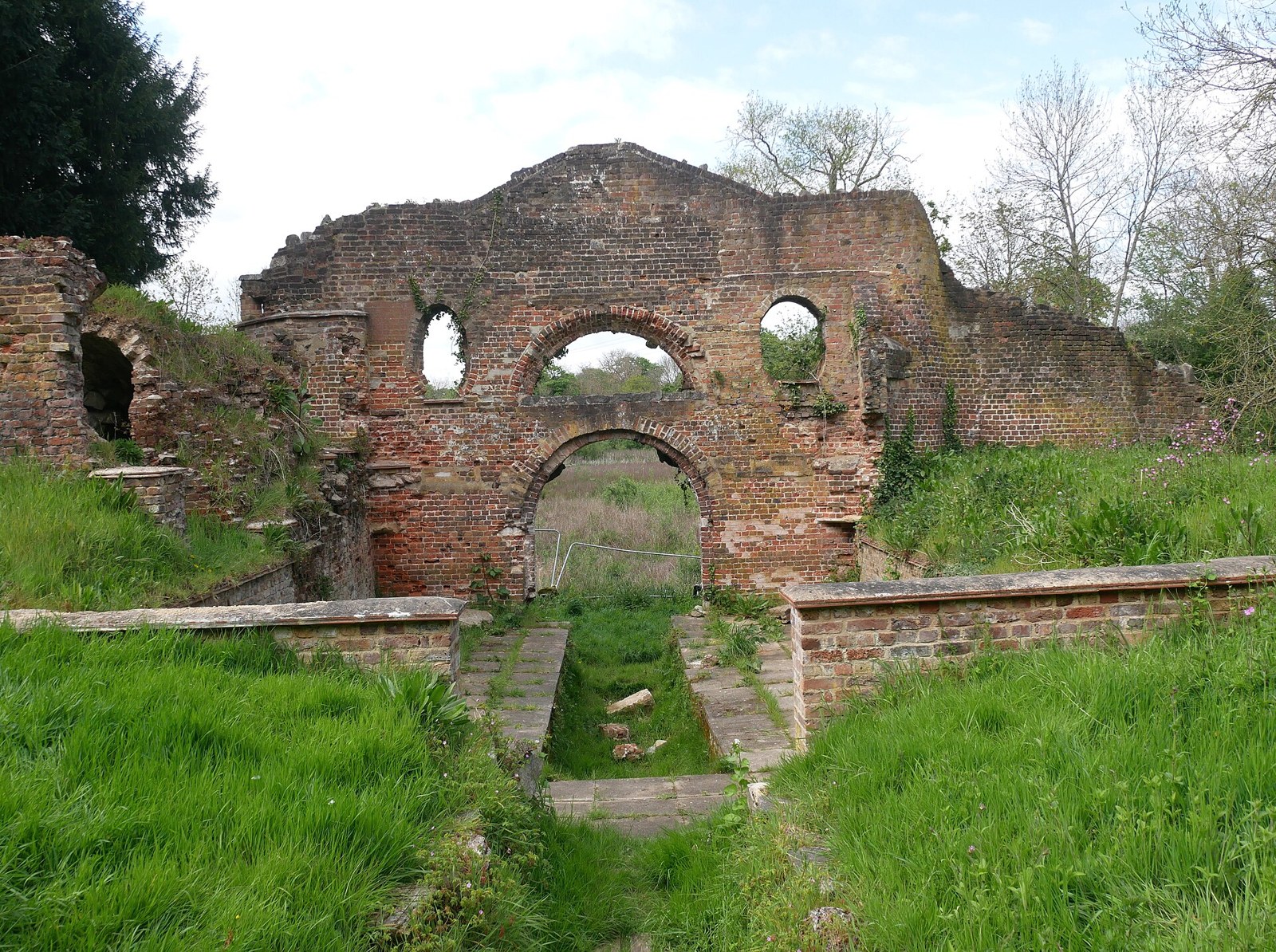
The Grotto, on the Ornamental Water's west bank, was built in the early 1760s and, as the Heritage of London Trust tells it, badly damaged by a fire in 1884, which left only the outer walls. It's on Historic England's Heritage at Risk Register: condition poor, vulnerability high, trend declining.
A note on grade: the City calls it "Grade II* listed", but Historic England's entry says Grade II, listed on 20 December 1954, within the Grade II* registered park and garden. We've used Historic England's, the statutory record.
The City says work to stabilise the Grotto was completed in March 2026, and its photos show the scaffolding down and a metal supporting structure revealed. The planning application for the works, reference 2682/24 on the Council for British Archaeology's casework database, describes a steel armature fixed to the rear to limit the lean of the apex. The City hoped Historic England's assessment in spring and summer 2026 would see the Grotto removed from the register. We found no confirmation, and the register still lists it as at risk as far as we can tell.
What comes next "will involve applying for funding and exploring possible options for the future of the site", and funding for a project this size "may take a couple of years". Fencing and restricted access stay. "Later this year we will be consulting with the local community" on what people want at the Grotto, though no dates are published.
If you see people in the compound or on the structure, call the Forest's 24-hour line on 020 8532 1010.